Short answer: if you are a beginner in India and you are not sure which job you want yet, start with Python. If you already know your goal, pick the language that leads straight to it: JavaScript for web development, Java or C# for company software jobs, Kotlin for Android apps. Whichever you choose, learn SQL alongside it.
Every year, thousands of students in Coimbatore and across Tamil Nadu lose months jumping between languages because a friend, a YouTube video or a reel told them something different. This guide helps you decide once, and then spend your time actually building things.
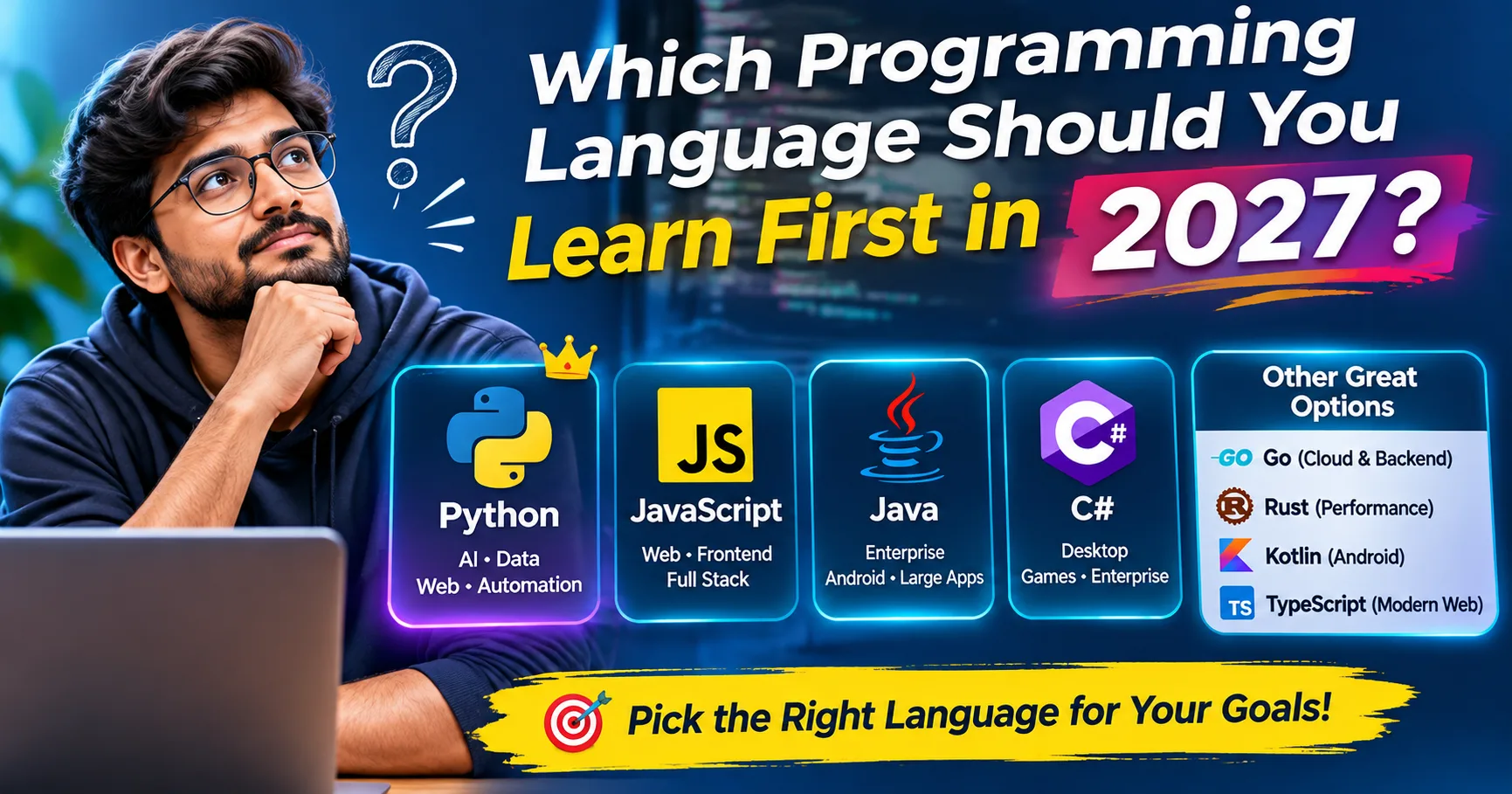
Quick answer: which language for which goal?
| Your goal | Learn first | Typical first job titles |
|---|---|---|
| Not sure yet / first time coding | Python | Python Developer, Junior Data Analyst, Automation Engineer |
| Websites and web apps | JavaScript (then React + Node.js) | Frontend Developer, MERN Stack Developer |
| Jobs in large IT companies and banks | Java | Java Developer, Backend Developer |
| Microsoft / .NET projects, games with Unity | C# | .NET Developer, C# Developer |
| Android apps | Kotlin | Android Developer |
| Data, reports and dashboards | SQL + Python | Data Analyst, MIS Executive |
| College exams, placement aptitude, embedded systems | C / C++ | Embedded Engineer, plus a strong base for any other language |
1. Python: the best first language for most beginners
Python reads almost like English, so you spend your energy on logic instead of fighting brackets and semicolons. It is also one of the most useful languages today: automation scripts, web backends (Django, Flask, FastAPI), data analysis and almost every AI and machine-learning tool you hear about.
- Choose Python if: you are from a non-CS background, you are curious about data or AI, or you simply want the easiest start.
- Be careful: Python alone is rarely enough for a job. Pair it with SQL and one framework (Django or FastAPI) or with data tools (Pandas, Excel, Power BI).
👉 Python Training in Coimbatore (classroom & live online)
2. JavaScript: if you want to build websites and web apps
JavaScript is the only programming language that runs natively in every web browser, so every website you use depends on it. With Node.js it also runs on the server, which means one language can take you from the screen the user sees to the database behind it. That is exactly what the MERN stack (MongoDB, Express, React, Node.js) is.
- Choose JavaScript if: you like seeing your work on screen immediately, or you want to freelance and build websites for local businesses.
- Be careful: learn plain JavaScript properly before jumping into React. Most beginners who "know React" but not JavaScript struggle in interviews.
3. Java: still the backbone of large company software
Banks, insurance companies, telecom systems and big service-based IT companies run huge amounts of Java code, and they keep hiring freshers to maintain and extend it. Java is stricter than Python, which feels harder at first but teaches you object-oriented programming (OOP) very clearly. Campus placement tests often ask Java or C questions.
- Choose Java if: you are aiming for campus placements or jobs in large IT companies.
- Next step after core Java: SQL, JDBC, then Spring Boot for building REST APIs.
👉 Java Programming Training in Coimbatore
4. C#: the language of the Microsoft .NET world
C# is very close to Java in style, and it is the main language of Microsoft's .NET platform. Many companies that build business software, ERP systems and internal tools on Microsoft technologies use C# with ASP.NET Core. It is also the language of the Unity game engine, if games interest you.
- Choose C# if: you want .NET developer roles, or you plan to work with Microsoft Azure and enterprise apps.
- Good to know: once you know C#, moving to Java (or the other way) takes weeks, not months.
👉 C# Programming Course | .NET Training
5. Kotlin: the modern choice for Android apps
Google made Kotlin its preferred language for Android development, and most new Android apps and tutorials now use it. Kotlin is shorter and safer than Java (its null safety prevents a whole class of crashes), and it works with existing Java code, so companies can switch gradually.
- Choose Kotlin if: you want to build Android apps, or you already know some Java and want a modern upgrade.
- Next step: Android basics, Jetpack Compose for the UI, and calling a REST API from your app.
Don't skip these: SQL and C
SQL is not a "first language" in the usual sense, but almost every developer and analyst job uses a database. Two or three weeks of SQL (SELECT, JOIN, GROUP BY, simple table design) makes you far more employable in any of the paths above.
C and C++ are worth learning if your college syllabus or placement aptitude tests use them, or if you are interested in electronics and embedded systems. They teach you how memory and computers really work, which makes every other language easier later.
👉 C & C++ Programming Training | Oracle Database Training
Still confused? Answer these 3 questions
- What do you want to build? Websites → JavaScript. Android apps → Kotlin. Data reports → SQL + Python. Company backend software → Java or C#.
- How much time do you have? If you need a job quickly, choose the path with the shortest route to a portfolio: Python + SQL or JavaScript (MERN).
- Where do you want to work? Large service companies and campus drives often test Java or C. Startups and product companies care more about what you have built.
If you still cannot decide, pick Python. The logic you learn (variables, loops, functions, OOP) carries over to every other language.
A simple 6-month plan from zero to job-ready
| Month | Focus | Output |
|---|---|---|
| 1 | Basics of your one chosen language: variables, conditions, loops, functions | 20–30 small programs on GitHub |
| 2 | OOP, collections, error handling, files | A small console project (e.g. student marks or billing system) |
| 3 | SQL and connecting your language to a database | The same project, now storing data in MySQL or Oracle |
| 4 | One framework: Django / Spring Boot / ASP.NET Core / React + Node / Android | A real web app, API or mobile app |
| 5 | Git, deployment, a second bigger project | Two projects live online with a clean README |
| 6 | Interview preparation: problem solving, project explanation, resume | Resume + LinkedIn + mock interviews |
5 mistakes beginners make
- Switching languages every month. Stay with one language until you have built at least two projects.
- Only watching videos. If you watched 10 hours of tutorials and wrote 10 lines of code, you have not learned programming yet. Type every example yourself.
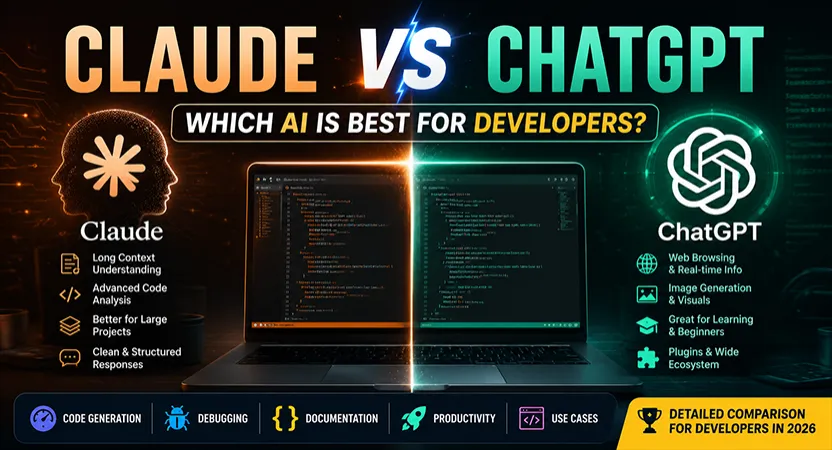
- Copy-pasting from AI tools. ChatGPT and Claude are excellent teachers, but interviewers will ask you to explain your own code. Use AI to understand, not to skip understanding. (Read: Claude vs ChatGPT for developers.)
- Ignoring SQL and Git. They appear in nearly every job description and take only a few weeks.
- No projects to show. Certificates help you get shortlisted; projects help you get selected.
Will AI make learning to code pointless?
No. AI tools write code faster, but someone still has to understand the problem, check whether the code is correct and secure, and fix it when it breaks. Companies want developers who can use AI well, and that needs strong fundamentals. We wrote about this in detail here: Will AI replace software jobs?
Learn with Sivani Academy
At Sivani Academy you can learn any of these languages live online from anywhere, or in a classroom batch in Coimbatore, with classes in English and Tamil. Every course includes hands-on, real-time projects, a course certificate and placement support (resume preparation and mock interviews).
Not sure which one fits you? Tell us your background and goal, and our trainer will suggest the right starting point.
👉 See all programming courses or talk to us.
Frequently asked questions
Which programming language is easiest for beginners?
Python is generally the easiest to start with because its syntax is simple and readable. You can write useful programs within the first few weeks.
Can a non-IT or arts graduate learn programming and get an IT job?
Yes. Many developers come from non-CS backgrounds. Start with Python or JavaScript, build two or three projects, learn SQL and Git, and focus on explaining your projects clearly in interviews.
Should I learn Java or Python first?
Learn Python first if you want an easier start or are interested in data and AI. Learn Java first if you are preparing for campus placements or want backend jobs in large IT companies.
Is Kotlin better than Java for Android?
For new Android apps, yes. Kotlin is Google's preferred language for Android, it is shorter and safer than Java, and it works alongside existing Java code.
How long does it take to learn a programming language?
Most learners can understand the basics in 4–6 weeks with regular practice. Becoming job-ready, with a framework, a database and projects, usually takes 4–6 months.
Can I learn programming in Tamil?
Yes. At Sivani Academy, live online and classroom batches are available in English and Tamil, so you can learn in the language you are most comfortable with.